
Introduction
The internet has become a daily part of our lives. We use it to study, work, shop, communicate, and entertain ourselves. While the online world offers many benefits, it also comes with risks that cannot be ignored. Cybercrime, scams, identity theft, and privacy breaches are increasing every year. That is why learning how to stay safe online is no longer optional—it is necessary.
Many people believe online safety is only for experts or tech-savvy users. In reality, anyone can protect themselves with the right knowledge and habits. Whether you are a student, a working professional, or a casual internet user, understanding online safety can save you from serious trouble. Simple actions like using strong passwords, avoiding suspicious links, and protecting personal data can make a huge difference.
This guide is written in simple English to help beginners and intermediate users understand online safety easily. You will learn what online safety really means, why it is important, and how to protect yourself step by step. You will also discover common mistakes people make, useful tips from experts, and clear answers to frequently asked questions.
By the end of this article, you will have a complete understanding of how to stay safe online and how to use the internet with confidence, awareness, and peace of mind.
What Is How to Stay Safe Online?
How to stay safe online means using the internet in a smart and secure way so your personal information, money, and identity remain protected. It involves being aware of online threats and knowing how to avoid them.
Online safety includes protecting your passwords, personal data, devices, and online accounts from hackers, scammers, and malicious software. It also means understanding what information you should and should not share on social media or websites.
Many online threats are designed to trick users. These can include fake emails, scam websites, harmful downloads, or messages that look real but are not. Learning how to stay safe online helps you recognize these dangers before they cause harm.
In simple words, online safety is about using the internet wisely, responsibly, and carefully so you can enjoy its benefits without risking your privacy or security.
Why Is How to Stay Safe Online Important?
The importance of online safety has grown rapidly as more activities move to digital platforms. From online banking to social media, almost everything now requires internet access.
One major reason online safety is important is identity protection. Cybercriminals can steal personal information and use it for fraud or illegal activities. This can lead to financial loss and emotional stress.
Another reason is data privacy. Many websites collect user data, and if that data falls into the wrong hands, it can be misused. Staying safe online helps you control what information you share and who can access it.
Online safety also protects children and teenagers from harmful content, cyberbullying, and online predators. For adults, it helps prevent scams, fake job offers, and phishing attacks.
In short, learning how to stay safe online helps you stay in control, avoid risks, and use the internet with confidence and peace of mind.
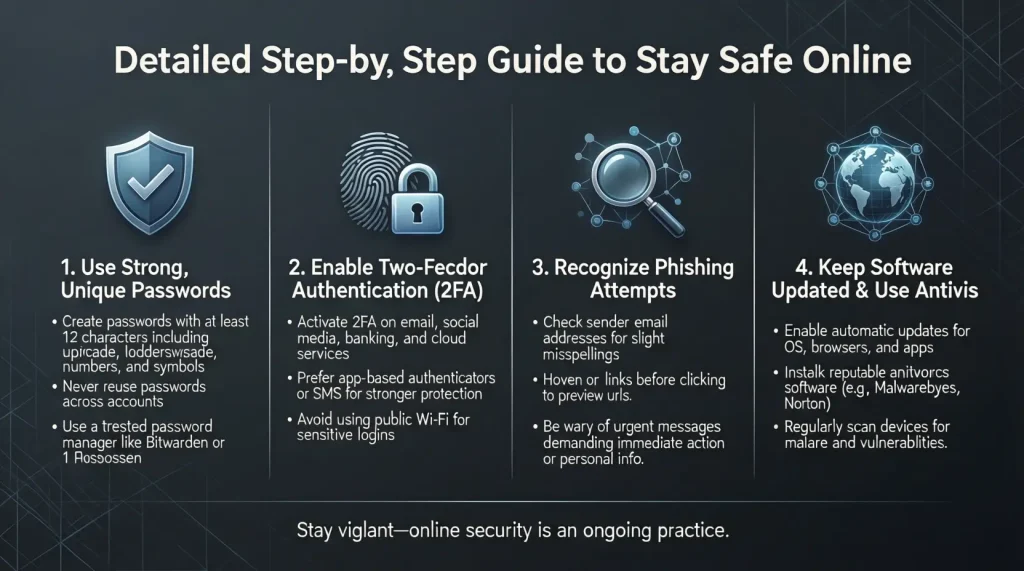
Detailed Step-by-Step Guide to Stay Safe Online
1. Use Strong and Unique Passwords
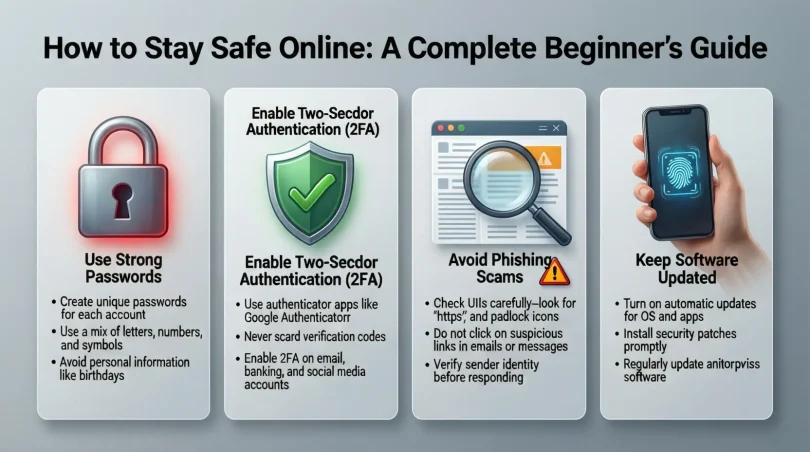
Strong passwords are the first line of defense against online threats. A weak password makes it easy for hackers to access your accounts.
A strong password should:
- Be at least 12 characters long
- Include letters, numbers, and symbols
- Avoid common words or personal details
- Be different for each account
Using a password manager can help you store and manage passwords securely without forgetting them.
2. Enable Two-Factor Authentication
Two-factor authentication adds an extra layer of security. Even if someone knows your password, they cannot access your account without a second verification step.
This usually includes:
- A code sent to your phone
- A fingerprint or face scan
- An authentication app
Enabling this feature greatly reduces the risk of unauthorized access.
3. Be Careful with Emails and Messages
Phishing emails are one of the most common online threats. These messages look real but are designed to steal your information.
Always:
- Check the sender’s email address
- Avoid clicking unknown links
- Never download suspicious attachments
- Do not share personal information via email
If something feels suspicious, it probably is.
4. Use Secure Websites Only
Before entering any personal or financial information, check if the website is secure.
A secure website:
- Starts with “https://”
- Shows a lock icon in the address bar
- Has a professional design and clear contact information
Avoid shopping or logging in on unsecured websites.
5. Keep Your Devices Updated
Software updates are not just for new features. They also fix security weaknesses.
Make sure to:
- Update your operating system regularly
- Keep apps and browsers up to date
- Use antivirus and firewall protection
These updates help protect your device from malware and hackers.
6. Be Careful on Public Wi-Fi
Public Wi-Fi networks are often unsecured. Hackers can easily access data shared on these networks.
To stay safe:
- Avoid online banking on public Wi-Fi
- Use a VPN for extra protection
- Turn off auto-connect features
If possible, use your mobile data instead of public Wi-Fi.
7. Limit What You Share Online
Oversharing on social media can be dangerous. Personal details can be used for identity theft or scams.
Avoid sharing:
- Home address
- Phone number
- Travel plans
- Financial information
Always review privacy settings on social media platforms.
8. Download Apps and Files Carefully
Only download apps from trusted sources like official app stores. Fake apps often contain malware.
Before downloading:
- Check reviews and ratings
- Read app permissions
- Avoid cracked or pirated software
These steps help reduce security risks.
9. Teach Children About Online Safety
Children are often unaware of online dangers. Teaching them basic safety rules is essential.
Teach them to:
- Not talk to strangers online
- Avoid sharing personal information
- Report suspicious behavior
- Ask for help when unsure
Parental controls can also help monitor activity.
10. Regularly Monitor Your Accounts
Check your bank statements, emails, and social media activity regularly. Early detection of unusual activity can prevent major damage.
If you notice something strange:
- Change passwords immediately
- Report the issue
- Enable additional security measures
Being alert is one of the best ways to stay safe online.
Benefits of How to Stay Safe Online
- Protects personal and financial information
- Reduces the risk of online scams and fraud
- Keeps your identity secure
- Improves digital confidence
- Protects devices from viruses and malware
- Helps children and families stay safe
- Saves time and money by avoiding cyber issues
- Creates a safer online environment
Disadvantages / Risks
While online safety practices are necessary, there are a few challenges to be aware of:
- Requires regular updates and attention
- Strong passwords can be hard to remember
- Security tools may slow down devices slightly
- Learning new safety habits takes time
- Overconfidence can lead to mistakes
However, these minor issues are far better than facing serious online threats.
Common Mistakes to Avoid
Many people make simple mistakes that put them at risk. Avoiding these can greatly improve your online safety.
- Using the same password everywhere
- Clicking on unknown links
- Ignoring software updates
- Sharing too much on social media
- Trusting unknown websites
- Using weak security settings
- Ignoring warning messages
Being aware of these mistakes helps you stay one step ahead of cyber threats.
FAQs
1. What is the best way to stay safe online?
The best way to stay safe online is to use strong passwords, enable two-factor authentication, avoid suspicious links, and keep your devices updated.
2. Why is online safety important for beginners?
Beginners are often targeted by scammers. Learning how to stay safe online helps them avoid common traps and protect their data.
3. Can antivirus software fully protect me?
Antivirus software helps, but it is not enough alone. Safe browsing habits and awareness are equally important.
4. Is public Wi-Fi dangerous?
Public Wi-Fi can be risky because it is often unsecured. Avoid sensitive activities or use a VPN when connected.
5. How can parents protect children online?
Parents can use parental controls, educate children about online risks, and monitor online activity regularly.
6. What should I do if I get hacked?
Change your passwords immediately, secure your accounts, report the issue, and scan your device for malware.
Expert Tips & Bonus Points
- Use a password manager to stay organized
- Review privacy settings every few months
- Log out of accounts on shared devices
- Avoid clicking pop-up ads
- Back up important data regularly
- Learn to recognize fake websites
- Trust your instincts when something feels wrong
These small habits can greatly improve your online safety over time.
Conclusion
Learning how to stay safe online is one of the most important skills in today’s digital world. The internet offers endless opportunities, but it also comes with real risks that should never be ignored. By following simple safety practices, you can protect your personal information, avoid scams, and enjoy a safer online experience.
Online safety is not about fear; it is about awareness and smart decision-making. Using strong passwords, staying alert, updating your devices, and being careful with what you share can make a big difference. These habits do not require technical knowledge—just consistency and attention.
As the digital world continues to grow, staying informed becomes even more important. Make online safety a regular habit, teach it to others, and stay updated with new threats and solutions. When you know how to stay safe online, you gain confidence, security, and peace of mind every time you go online.
By following the steps in this guide, you are already taking the right path toward a safer and smarter digital life.