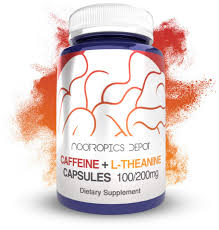

Most people who get interested in nootropics do not start with an exotic compound. They start with coffee, notice that it works but also makes them jittery, and go looking for something better. That search usually leads through the same three waypoints: caffeine, the amino acid L-theanine that smooths it out, and eventually modafinil, the prescription eugeroic that many consider the ceiling of what a wakefulness drug can responsibly do.
These three are not interchangeable, and they are not simply a ladder from weak to strong. Each one has a distinct mechanism, timing profile, and role. Understanding how they fit together — and when they do not — is the difference between a routine that supports your work and one that leaves you wired, sleepless, and no more productive than before. This guide lays out how each compound works, how to combine them, and how to build a weekly structure that any thoughtful nootropic user can adapt.
The Three Compounds at a Glance
| Compound | Mechanism | Onset | Half-life | Typical dose | Main role |
| Caffeine | Adenosine receptor antagonist | 15–45 min | 4–6 h | 50–200 mg | Quick alertness, mood lift |
| L-Theanine | Glutamate/GABA modulation, alpha-wave promotion | 30–60 min | ~1–3 h | 100–200 mg | Calm, reduces caffeine jitter |
| Modafinil | Dopamine transporter inhibition; orexin/histamine downstream | 1–2 h | 12–15 h | 100–200 mg (morning) | Sustained wakefulness and focus |
Caffeine: The Foundation Everyone Already Uses
Caffeine works by blocking adenosine receptors. Adenosine builds up during waking hours and signals sleepiness; caffeine occupies its receptors and delays the message. Secondary effects include a modest rise in dopamine and noradrenaline, which is why caffeine feels mildly motivating as well as alerting.
What people underestimate is the half-life. At four to six hours, a 2 p.m. cup still leaves a quarter of its caffeine in your system at 10 p.m., which measurably reduces deep sleep even if you fall asleep fine. Over weeks, that lost deep sleep quietly erodes the baseline you are trying to lift, and you end up needing more caffeine to reach the same place.
Practical guidelines that hold up in the research:
- Delay the first dose 60–90 minutes after waking so it does not overlap with your natural cortisol peak.
- Keep single doses under 200 mg; higher doses raise anxiety more than they raise performance.
- Set a cutoff around 8–9 hours before bed.
- Expect tolerance. Two or three caffeine-free days a month helps reset sensitivity.
L-Theanine: The Smoothing Agent
L-theanine is an amino acid found in green tea. On its own, it promotes relaxed alertness — measurable as increased alpha-wave activity on EEG — without sedation. Paired with caffeine, it reliably reduces the jitteriness, elevated heart rate, and scattered attention that caffeine causes at higher doses, while preserving or slightly improving the attentional benefits.
The classic ratio is 2:1 theanine to caffeine — for example, 200 mg theanine with 100 mg caffeine. This combination has been studied repeatedly in healthy adults, with consistent findings of improved accuracy on attention-switching tasks and reduced self-reported tension compared with caffeine alone.
Theanine is also useful on its own in the evening as a mild relaxant, though it is not a sleep aid in the sedative sense. Many people find that 200 mg an hour before bed helps quiet a racing mind after a stimulant-heavy day.
Where Theanine Fits With Modafinil
Modafinil is not caffeine, and it does not produce the same jitteriness, but some users do experience a tense, over-focused quality on full doses. Anecdotally, 200 mg of theanine taken alongside modafinil softens that edge. There is no clinical research on the combination specifically, but theanine’s safety profile is excellent and there is no known pharmacological conflict, so it is a low-risk addition.
Modafinil: The Heavy Hitter
Modafinil (Provigil) is a prescription wakefulness-promoting agent approved for narcolepsy, obstructive sleep apnea-related sleepiness, and shift work disorder. Its main mechanism is inhibition of the dopamine transporter, which raises extracellular dopamine gradually rather than in a spike; downstream, it increases orexin and histamine activity in the brain’s arousal centers. Armodafinil (Nuvigil) is the R-enantiomer, dosed at 150–250 mg, with a similar half-life of around 15 hours.
Subjectively, modafinil feels different from caffeine. There is less “buzz” and more of a steady willingness to keep working. Tasks feel less aversive; the urge to check your phone diminishes; and the alertness lasts through the afternoon slump without a second dose. Research in healthy adults consistently shows improvements in sustained attention, planning, and working memory, with the largest gains on long, demanding tasks and in sleep-deprived conditions.
The cost is timing rigidity. With a 12–15 hour half-life, modafinil taken at noon is still substantially active at midnight. The single most common mistake new users make is dosing too late and then lying awake — which damages the next day and prompts another dose, creating a loop.
Guidelines that experienced users converge on:
- Take it early, ideally within an hour of waking, and never after mid-morning.
- Start at 100 mg. Many people find it sufficient; 200 mg is the upper end of the standard range.
- Use it a few days a week rather than daily. Tolerance is limited but real, and off-days preserve the effect.
- Hydrate and eat; modafinil suppresses appetite and thirst cues, and dehydration is a common cause of the headache users report.
Combining All Three: The Interaction Questions
Modafinil plus caffeine. Both are stimulants acting through different mechanisms, and the effects add. For most people, a full dose of modafinil plus a normal coffee is too much: heart rate rises, anxiety creeps in, and focus becomes brittle. On modafinil days, cut caffeine to a single small cup or skip it. If you are sensitive to either, skip it.
Modafinil plus theanine. Low risk, plausibly helpful, no evidence of harm. Worth trying if modafinil makes you feel tense.
Caffeine plus theanine. Well studied, well tolerated, arguably the best-evidenced nootropic stack that exists. This is the default for non-modafinil days.
All three together. Occasionally useful — a small coffee with theanine in the morning of a modafinil day — but it is easy to overshoot. If you do it, keep caffeine minimal.
A Sample Weekly Structure
The point of a routine is to get the benefits of each compound without letting any of them erode your sleep or build tolerance. Here is one structure many people find sustainable. Adjust it to your schedule and, obviously, to your doctor’s advice.
Monday — Modafinil day. 100–200 mg modafinil shortly after waking. No coffee, or a small one with 200 mg theanine. Plan the day’s hardest deep-work blocks for late morning through mid-afternoon. Theanine in the evening if needed.
Tuesday — Caffeine/theanine day. 100 mg caffeine + 200 mg theanine at 9 a.m. Optional second small dose at 1 p.m. No stimulants after 2 p.m.
Wednesday — Modafinil day. Same as Monday. If Monday’s dose kept you up, drop to 100 mg or move the dose earlier.
Thursday — Caffeine/theanine day.
Friday — Light day. A single coffee if you want it. This is a good day for lighter work, planning, and admin.
Saturday and Sunday — Baseline days. Minimal or no stimulants. These days are when your adenosine receptors recover, your sleep debt clears, and you find out what your natural baseline actually is. If you cannot function on weekends without a stimulant, that is a sign the weekly structure has tilted too far.
Why Rest Days Are Not Optional
Every stimulant, from caffeine to modafinil, borrows from the future. Caffeine masks adenosine; modafinil overrides the sleep drive. Neither removes the need for sleep, and neither repairs the effects of chronic sleep loss on memory consolidation, mood, and immune function. The routine above works because it alternates compounds and includes days with none, which keeps each tool effective and keeps you honest about your actual energy levels.
Building Your Own Routine: A Checklist
- Fix sleep first. Any routine built on a five-hour night is a routine for hiding a problem, not solving it.
- Add one compound at a time. Start with caffeine + theanine for two weeks before considering anything stronger. Learn what your baseline feels like.
- Log it. A one-line daily note — what you took, when, how you slept, how work went — will show patterns within a month.
- Dose by the clock, not by feel. Set cutoffs for each compound and stick to them.
- Match the compound to the day. Use modafinil for long, demanding, well-defined tasks. Use caffeine + theanine for ordinary days. Use nothing for creative wandering and rest.
- Reassess monthly. If doses are creeping up or rest days feel impossible, scale back.
If you do decide to add a prescription-strength option, source it carefully. Whether through a doctor or a transparent smart drug vendor, you want to know exactly what is in the tablet and how much.
Responsible Use
Modafinil and armodafinil are prescription medicines in most countries and Schedule IV controlled substances in the United States. Their abuse potential is low compared with amphetamine-class stimulants, but they have real side effects and rare serious risks, and they interact with several common medications including hormonal contraceptives. Consult a doctor before use, follow the rules that apply where you live, and treat any wakefulness agent as a supplement to good sleep rather than a substitute for it.
FAQ
Can I take modafinil and coffee together? You can, but most people find the combination overstimulating. Start with modafinil alone; if you want caffeine, keep it to a small cup, ideally paired with theanine.
How much L-theanine should I take with caffeine? The best-studied ratio is 2:1 — for example, 200 mg theanine with 100 mg caffeine. Some people prefer 1:1. It is not a precise science, and theanine is very safe across that range.
Does theanine cancel out caffeine? No. It reduces the anxiety and jitteriness caffeine causes while preserving the alertness. Studies generally show equal or slightly better attention performance with the combination than with caffeine alone.
What time should I take modafinil? As early in the day as possible — ideally within an hour of waking, and never after mid-morning. Its 12–15 hour half-life means afternoon doses reliably disrupt sleep.
How often can I use modafinil? Most experienced users limit it to two or three days per week and take at least one fully stimulant-free day. Daily use leads to reduced effect and accumulates sleep debt that the drug then masks.
Final Thoughts
Caffeine, L-theanine, and modafinil form a natural progression, but the goal is not to climb to the strongest compound and stay there. It is to have the right tool for the right day: the calm alertness of caffeine and theanine for ordinary work, the sustained focus of a eugeroic for the rare long haul, and nothing at all on the days when your brain needs to recover. Build the routine around sleep, add compounds one at a time, keep a log, and you will end up with something that actually improves your working life rather than just changing how it feels.
For more topic guides and related resources, visit Modavance.